Introduction
Intelligent robots and humanoid robots require extremely strong motion control capabilities, powerful sensing and computing capabilities. The industry chain involves AI, mechanical manufacturing, motion control, sensors and many other advanced technologies and innovations.
This D-news brings the current state of humanoid robot materials and what’s on the horizon with a focus on their impact on the Chemical and Material industry.
Table of content
1. The development and status of humanoid robots
1.1. The development of humanoid robots
1.2. Global market size of humanoid robot – figures 2025
1.3. Value chain of humanoid robots
1.4. The number of global enterprises involving humanoid robots
1.5. The number of patents on humanoid robots
2. Main modules and materials of humanoid robots
2.1 Sensory System
2.2 Transmission System
2.3 Appearance/Body
3. Industry Outlook
4. Daydream & Dynovel
5. Reference
6. Appendix
1. The development and status of humanoid robots
1.1 The development of humanoid robots
A humanoid robot (or “bionic human”) is a type of robot designed to mimic the appearance and behavior of a human being.
According to the maturity of product motion and interaction functions, it can be divided into four development stages:
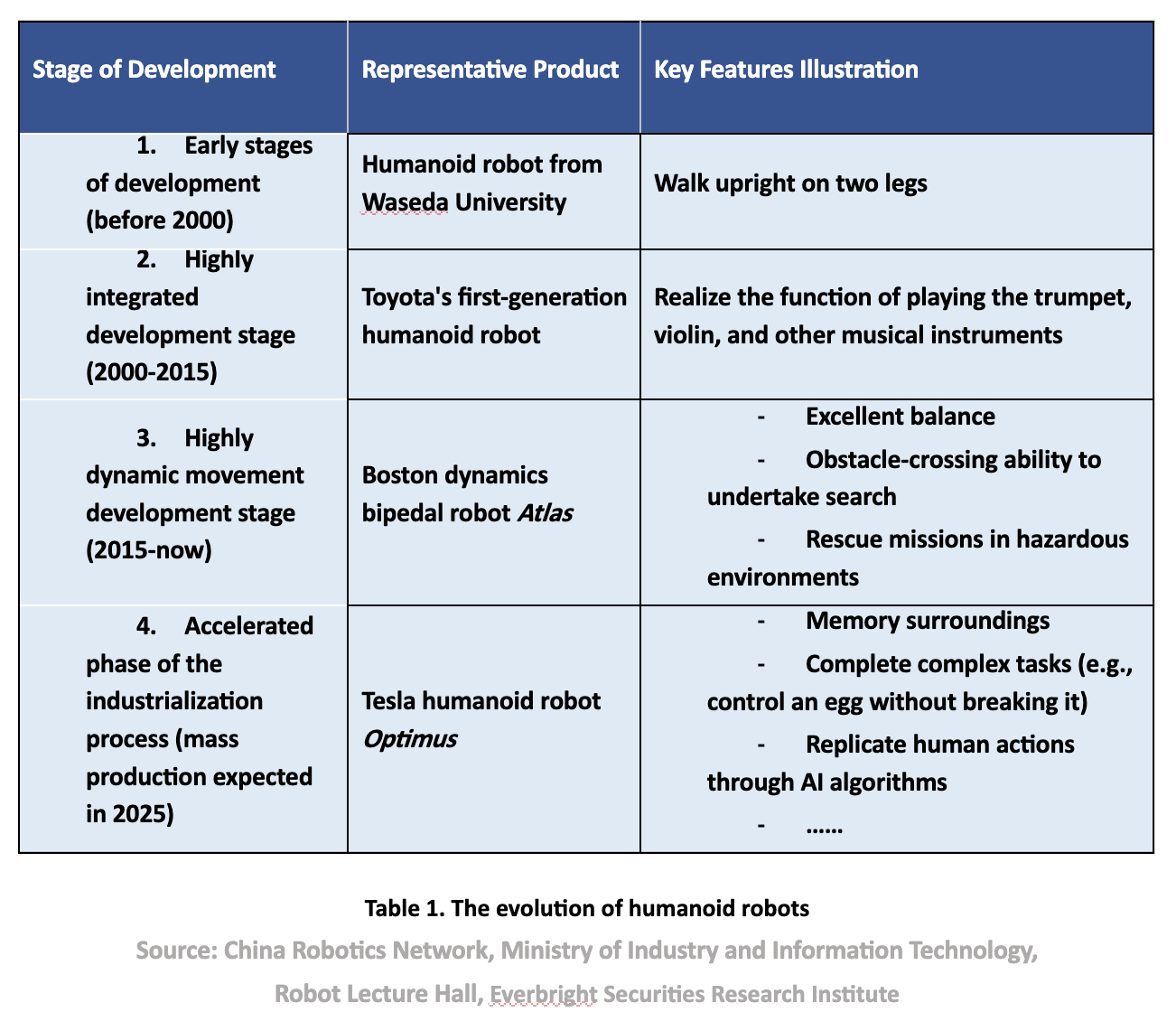
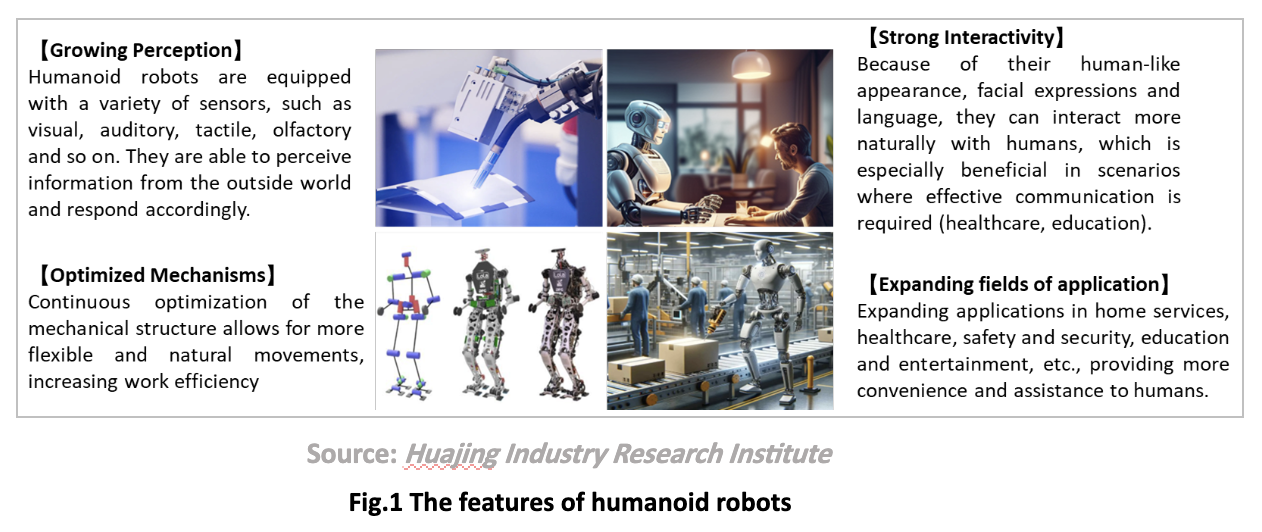
The current development of humanoid robots is in the high dynamic motion development stage. At this stage, the features that a humanoid robot has are as follows:
1.2. Global market size of humanoid robot – figures 2025
The next 5~10 years are widely seen as a period of rapid growth for humanoid robots (with no distinction between military and non-military market), with projected CAGR of 35~50% or even higher globally.
However, forecasts for the market size vary across sources:
- The global humanoid robot market is expected to reach 1.5~5.5 billion USD in 2025 and is projected to grow to 7~20.6 billion USD in 2028. (*)
- The Chinese humanoid robot industry is projected to reach 0.7~1.7 billion USD in 2025 and 5.5 billion USD in 2028. (**)
(*) Source: Goldman Sachs, Research and Markets, Markets and Markets, Fortune Business Insights, SNS Insider, Qianzhan, Daydream
(**) Source: China Humanoid Robot Industry Conference (2024), 2025 Humanoid Robots and Embossed Intelligence Industry Research Report, DBS Group Research, Daydream
1.3. Value chain of humanoid robots
Value chain illustration in 2025:
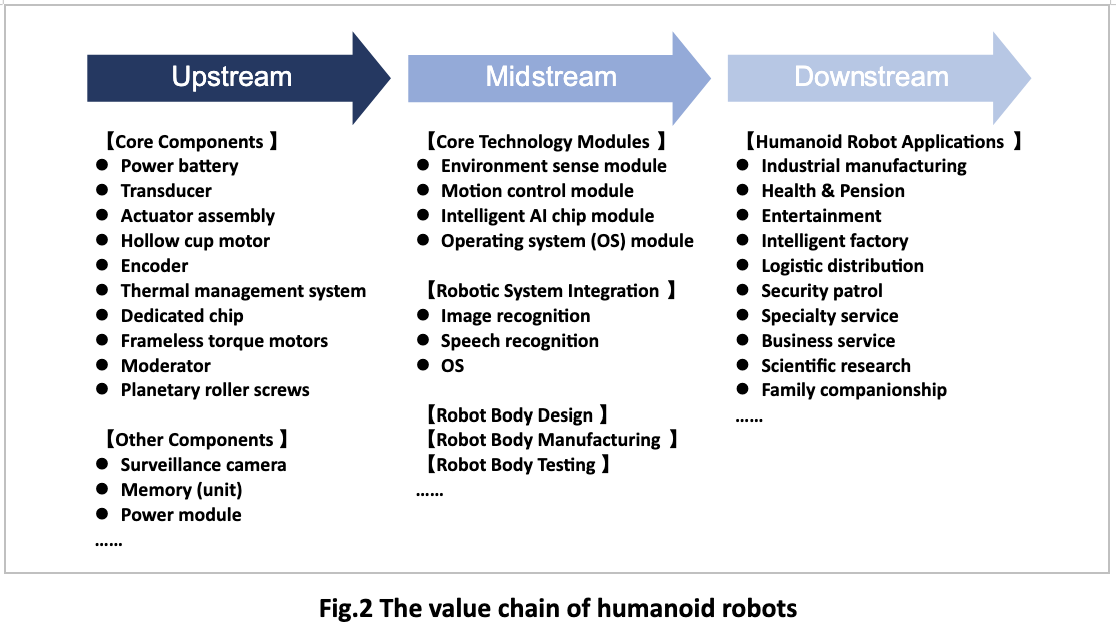
Upstream core components have high value and large incremental space.
- Software part: Those who can self-research or master core technologies (like motion control and artificial intelligence algorithms) will be in control of the pivot and brain of humanoid robots. To a certain extent, they are expected to dominate the direction of the development of humanoid robots and the rhythm of the development of humanoid robots on the technical level.
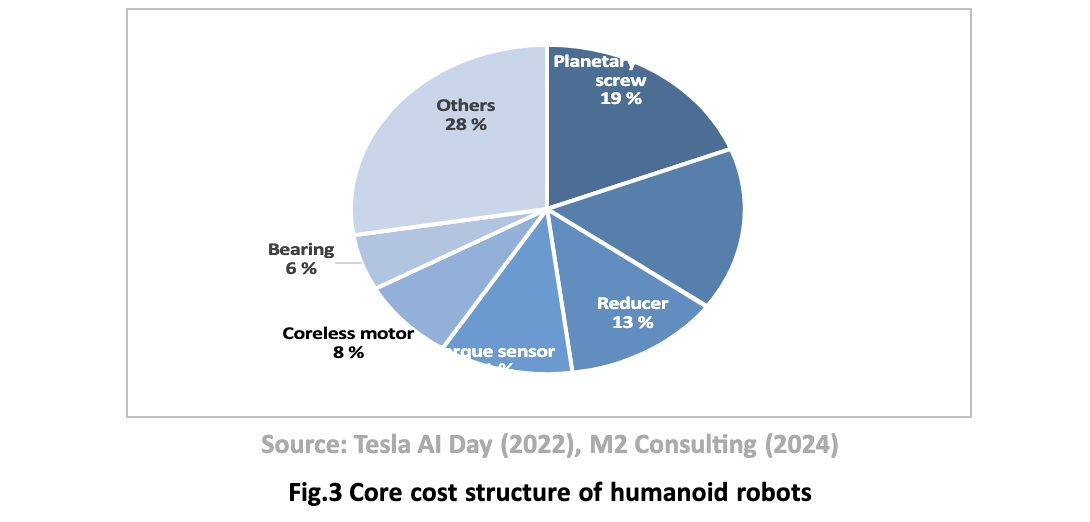
- Core cost structure of humanoid robots (take TeslaBot as an example in 2023)
1.4. The number of global enterprises involving humanoid robots
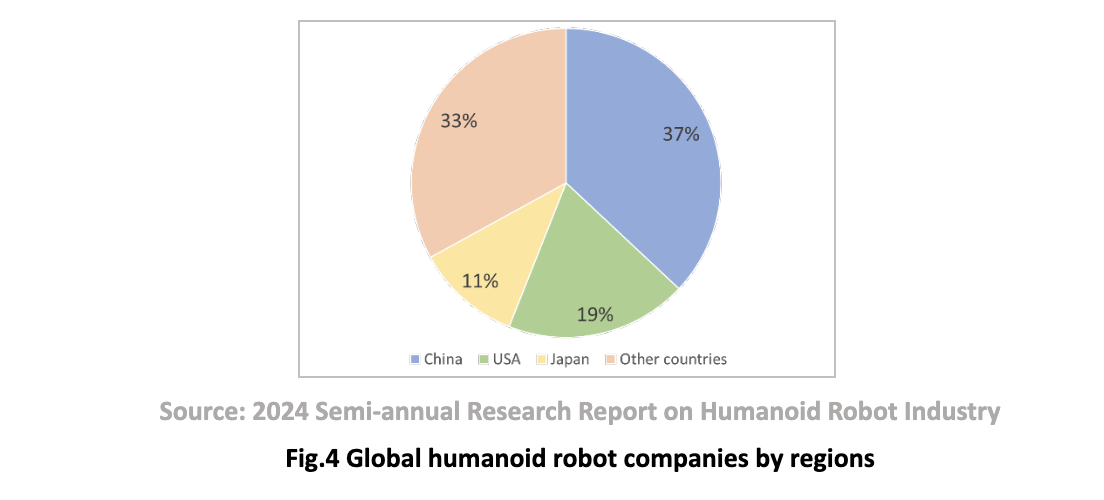
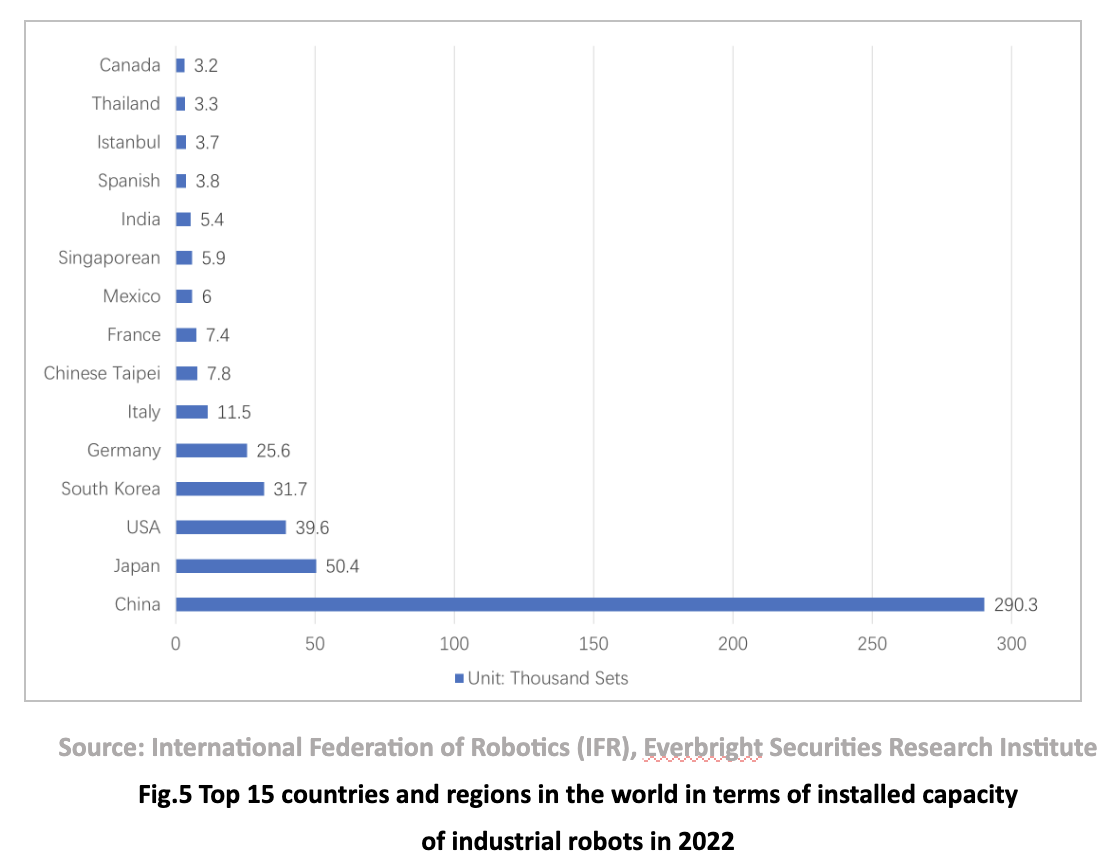
In terms of the number of enterprises, China, USA and Japan are far ahead of other regions. As of June 2024, there are more than 160 humanoid robot body manufacturing enterprises in the world, with Chinese companies accounting for 37%, American companies at 19% and Japanese companies at 11%. (New Strategy Industry Research Institute)
1.5. The number of patents on humanoid robots
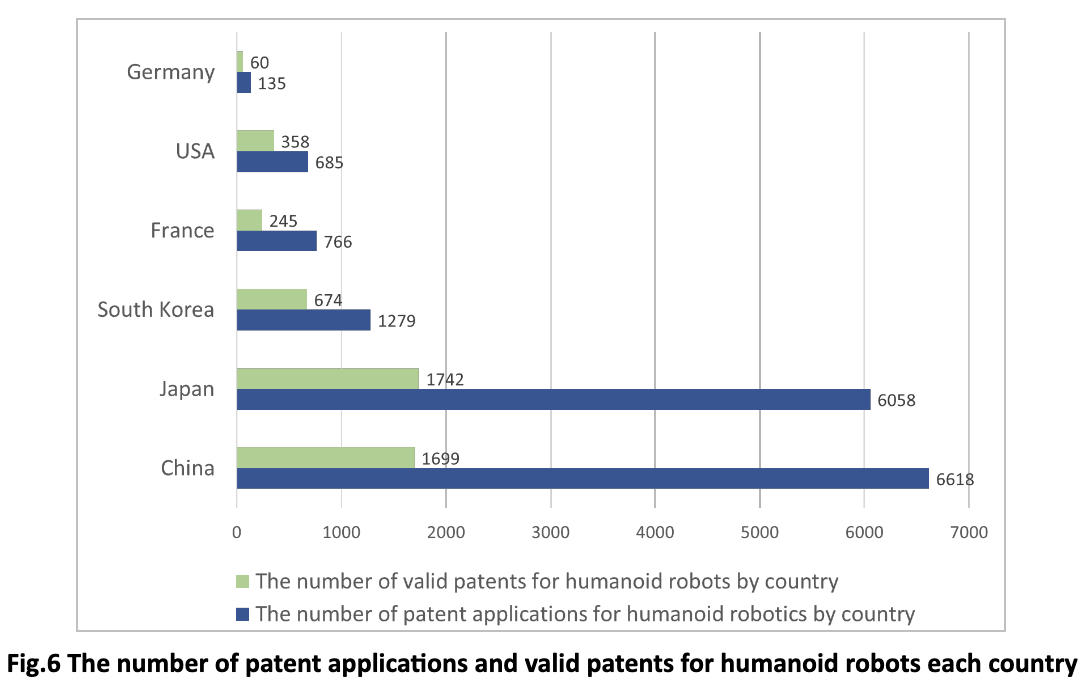
In the field of humanoid robots, China, Japan, South Korea, USA, France, and Germany have the highest numbers of patent applications. As of May 2023, the total number of patents for humanoid robots in China reached 6,618, ranking first in the world.
2. Main modules and materials of humanoid robots
As a highly integrated and intelligent robot with a high degree of generalization, humanoid robots require strong motion control as well as robust perception and computational capabilities.
The core systems of a humanoid robot can be divided into six main parts as illustrated below:
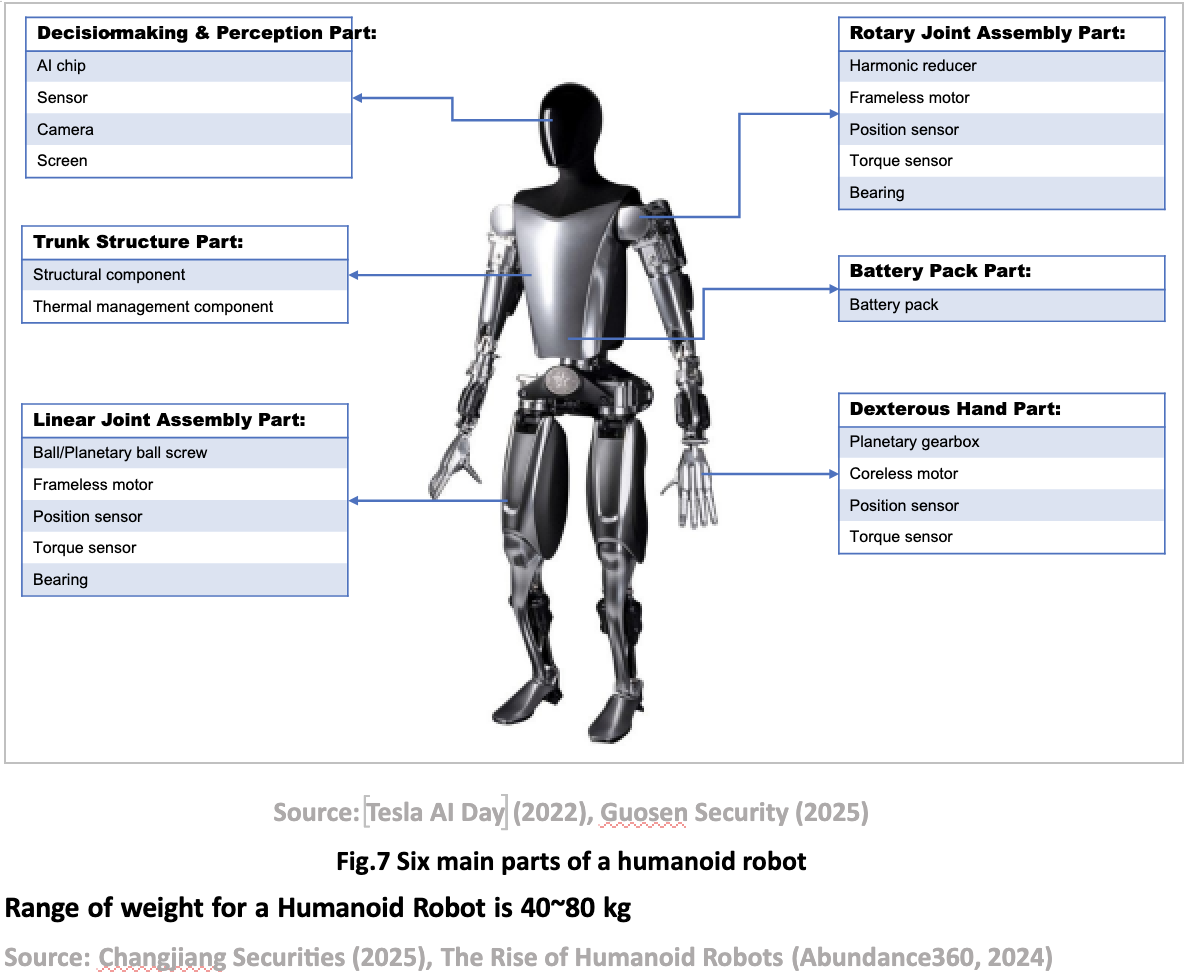
There are three main systems: Sensory System, Transmission System, and Appearance.
2.1 Sensory System
The most important process of sensory system is the signaling & delivery of sensory information to the operating center, and the core of this process is the sensor.
Sensors are present in several parts of humanoid robot, such as decision-making, linear joint assembly, rotational joint assembly, and dexterous hands.
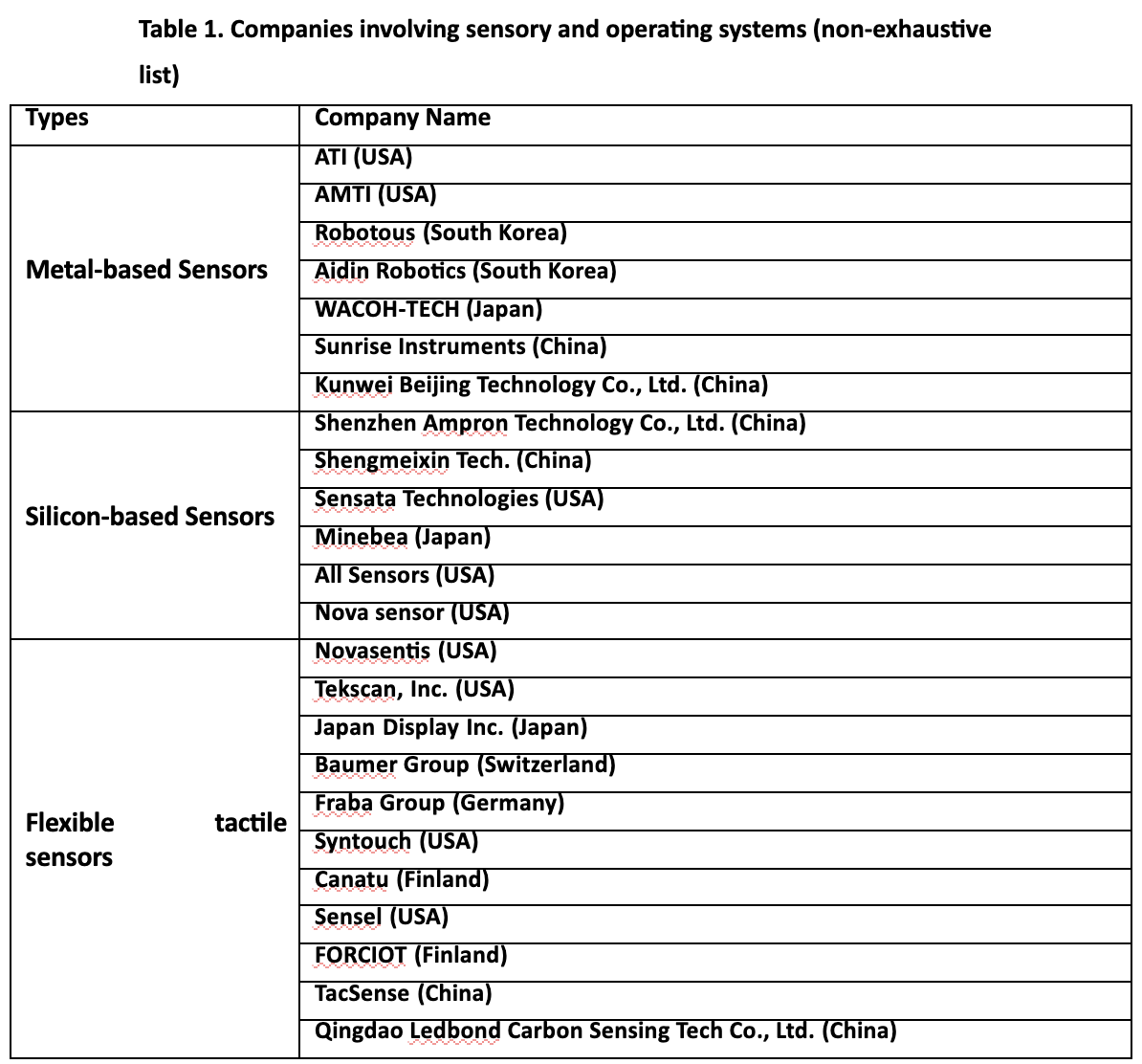
Typical materials in use for sensors are listed as below:
- Alloy steel & Bearing steel
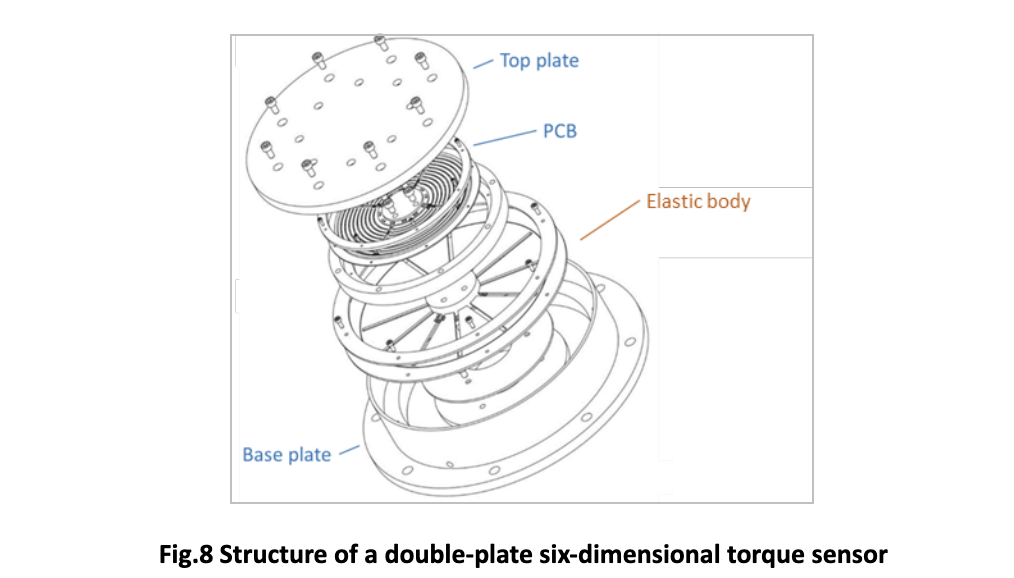
Alloy and bearing steel are quite common in sensory system, such as six-dimensional torque sensors. Taking Telsa’s humanoid robot Optimus as an example, such sensors are used on every linear and rotary actuator, giving Optimus a simpler structure and better force sensing and control. The main components of the six-dimensional torque sensor are elastic body (as shown in Fig.8), silicon strain gauges, PCB, etc., of which the elastomer structure is mainly made of aluminum alloy and stainless steel.
- Silicon-based material
Silicon strain gauge is the heart of the sensor and a major component of its value. Silicon strain gauge is made by slicing (from monocrystalline silicon), milling, etching and press-welding the leads, and finally affixing it to a polyimide substrate. The key to how the silicon strain gauge works is to measure the change in resistance due to the change in the volume of silicon, which is captured and calculated to get the amount of force. - PVDF
- Flexible tactile sensors, also known as “electronic skin”, can realize the detection of the contact force with the environment, temperature, humidity, vibration, material, hardness (soft and hard) and other characteristics. It is an important sensor that enables the robot to directly perceive the environment, helping intelligent humanoid robots to realize industrialization.
- PVDF is soft, thin, tough, and sensitive, and has great similarity to human skin, making it an ideal material for flexible sensors.
2.2 Transmission System
Transmission parts include gears, motors, lead screws, bearings, reducers, and other components. They are the main components that constitute the physical movement of humanoid robots.
Categorized by control methods, motors can be further classified into stepper motors and servo motors. The joints of humanoid robots use frameless torque motors to provide the necessary motion performance and motion control.
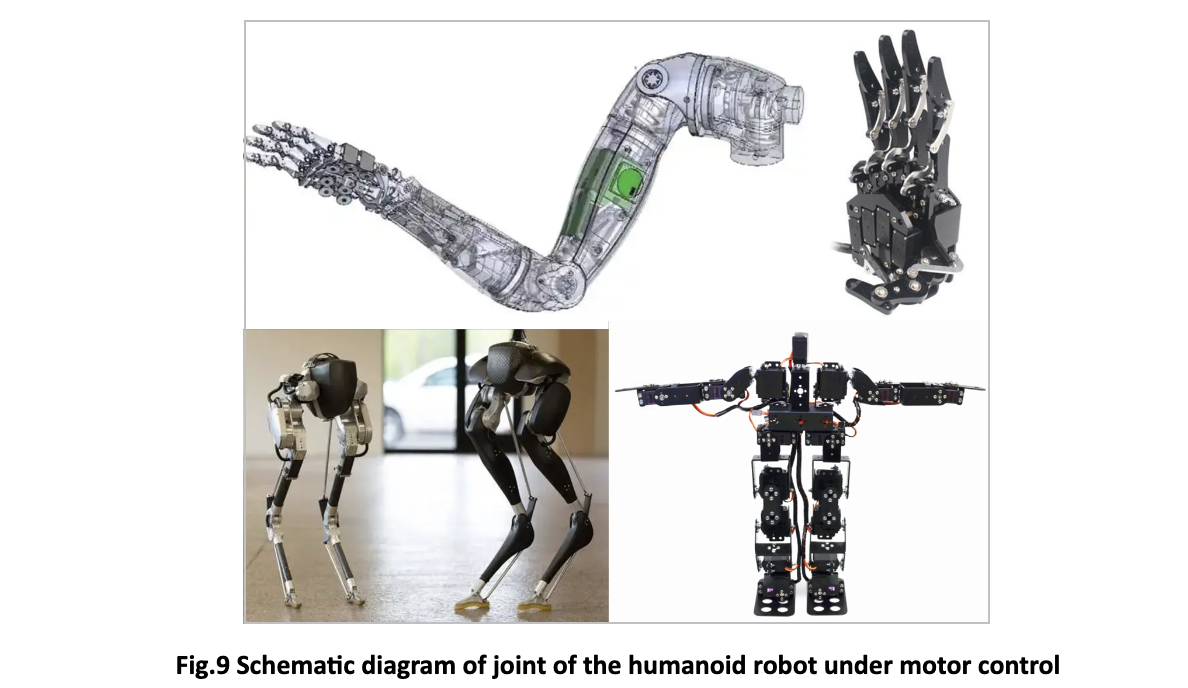
Typical materials used in the transmission system are listed as below:
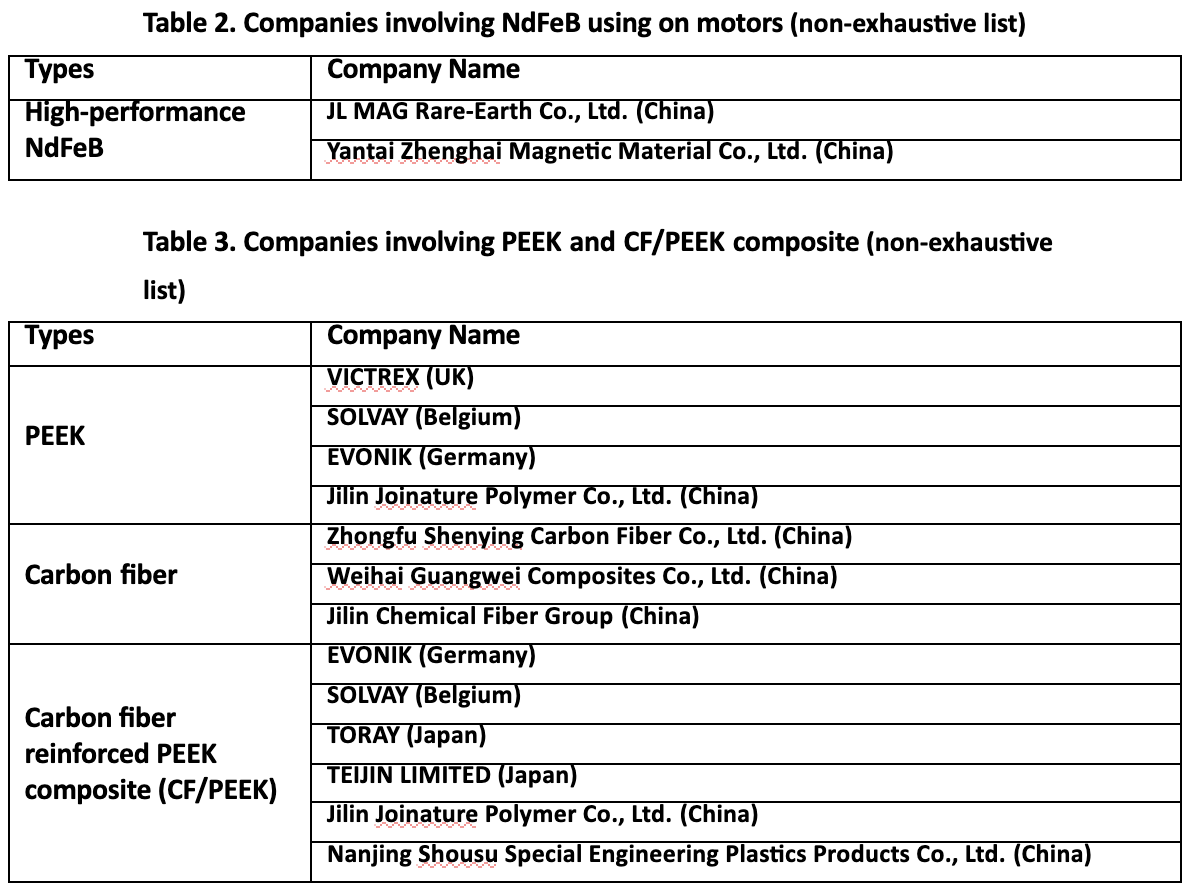
- Permanent magnetic material
- Permanent magnetic materials have the characteristics of high magnetic energy products, high coercive force, small size, light weight and strong stability, and it is the magnetic material with the widest range of applications, highest cost performance and best overall performance at present.
- High magnetic energy product (BHmax) is important for servo motors in humanoid robots, because the motors need to provide high torque in a limited space.
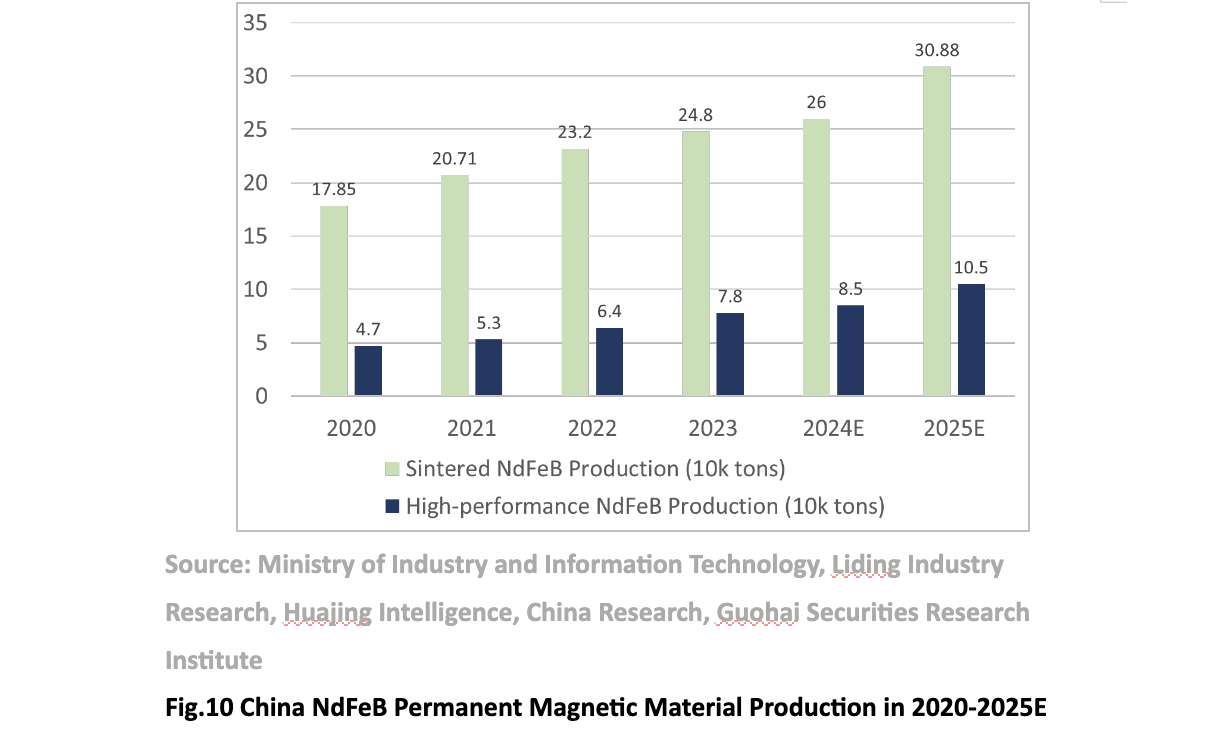
- Preliminary estimates suggest that a humanoid robot requires 3.4 kg of high-performance NdFeB products.
- NdFeB: the overall market in China shows a lack of high-end production capacity along with polarization in production scale. China’s sintered NdFeB production in 2022 is expected to exceed 230,000 tons, in which the high-performance NdFeB production is only 64,000 tons, accounting for less than 30%. (Ministry of Industry and Information Technology)
- Permanent magnetic materials have the characteristics of high magnetic energy products, high coercive force, small size, light weight and strong stability, and it is the magnetic material with the widest range of applications, highest cost performance and best overall performance at present.
- Alloy steel & Bearing steel
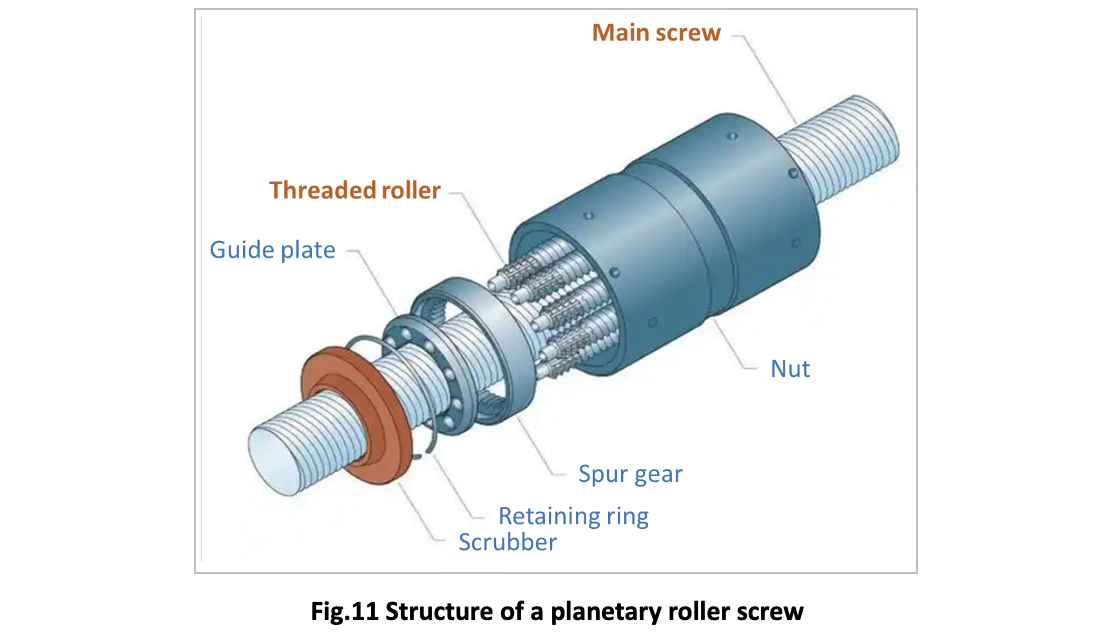
- Planetary Roller Screws convert the rotary motion of a motor into the linear motion of a screw or nut, and this structure is used in place of a hydraulic system. It has advantages of high running speed, high load carrying capacity and long service life.
2.3 Appearance/Body
The important requirements of Appearance are Flexibility (so it is more human-like) and Lightweight.
The lightweight materials commonly used in the field of humanoid robots are PEEK and carbon fiber composites.
- PEEK
- Tesla demonstrated the Optimus-Gen2, the second-generation humanoid robot, which lost 10 kilograms and walked 30% faster without sacrificing performance, relying on a lightweight material — PEEK.
- Preliminary estimates suggest that a humanoid robot requires 5~10 kg of high-performance PEEK material.
- Performance advantages of PEEK
- Excellent physical and chemical properties, such as high temperature resistance, abrasion resistance, irradiation resistance and chemical corrosion resistance.
- Lightweight: weight of PEEK is about 1/3 that of high strength aluminum alloy, as the specific strength is about 8 times that of aluminum alloy.
- Good insulation properties and can maintain good electrical properties in a wide temperature range.
- Excellent tensile properties and creep resistance. PEEK will not be permanently deformed even if it is subjected to high loads for a long period of time at high temperatures.
- Application parts: It can be used in the skeleton, bearings, gears, and other parts of humanoid robots.
- Skeleton: the use of PEEK materials instead of metal can reduce the weight of the robot
- Bearings and gears: it can ensure the accuracy and reliability of the robot in the process of movement, while reducing friction and wear.
- Carbon fiber reinforced PEEK composites (CF/PEEK)
- CF/PEEK combines the high strength and high modulus of carbon fibers with the high temperature and chemical resistance of PEEK to form a lightweight material with even better performance.x
- The application of CF/PEEK in robotic arms aims at further reducing weight, increasing the strength and stiffness, while maintaining good thermoplastic and processability.
- In addition, CF/PEEK also has excellent fatigue and impact resistance, as well as good electromagnetic shielding effect, which is conducive to enhancing the adaptability and reliability of robots in complex environments.
Nb: There are other materials that are used and usable (like POM, …), which are intentionally not discussed in this document.
3. Industry Outlook
There are two major hurdles in the development of humanoid robot industry: achieving low-cost & large-scale production and the application of AI technologies.
2024 marks a year of acceleration for humanoid robots, with
- Advancements in artificial intelligence which provide strong momentum
- Improvements in scale, quality, and cost reduction for the manufacturing of key components such as planetary roller screws, six-axis force/torque sensors, tactile sensors, and hollow cup motors
In 2023, the Ministry of Industry and Information Technology of China issued the “Guidelines for the Innovative Development of Humanoid Robots”, which gave China’s “timetable” for the development of humanoid robots:
- By 2025, an initial innovation system for humanoid robots will be established, with breakthroughs in key technologies such as the “brain”, “cerebellum”, and “limbs” ensuring a safe and reliable supply of core components.
- By 2027, the technological innovation capacity of humanoid robots will be significantly improved, a safe and reliable industrial and supply chain system will be formed, an internationally competitive industrial ecology will be constructed, and the overall strength will reach a world-advanced level.
With the development of the humanoid robot industry, the need for materials used will increase: lighter, higher-performance materials will be required and for this development, Daydream could assist you.
4. Daydream & Dynovel
Since 2000, Daydream & Dynovel have proven offers in:
- Market & Business Strategy
- New Business Development
- Sustainability & Digitalization
- People Management – Training & Workshops
- Business Improvement for Market and Sales, including
- Market Segmentation
- Client Segmentation
- Channel-to-market
- Business & Go-to-market Plan
- M&A Scouting
- Capex Project
Since 2000, Daydream & Dynovel have:
- Over 120 B2B clients
- Three offices: Cologne for Europe, Philadelphia for Americas, Shanghai for Asia
- One unique best-in-class methodology and a team of engineers and PhDs
- A unique methodology & experiences
- A large network and knowledge
5. Reference
- Robot Revolution: AI and New Materials Usher in the Year of Industrialization, EINPRESSWIRE
- Supply chain analysis and material demand forecast in strategic technologies and sectors in the EU – A foresight study, European Commission
- The Rise of Humanoids, Explained, GLOBAL×INSIGHTS
- Humanoid Robot Parts Series (II) How do we think about marginal changes in Optimus dexterity?
- Accelerated development of humanoid robots, NdFeB, magnesium alloy significantly benefit – report on metal materials for humanoid robots
- [Robotics Industry Weekly Report] Keep eyes on tactile sensors and lightweight materials
- Humanoid robots are on the rise – industry chain combing overview
- Flexible tactile sensors may shine in the age of humanoid robots
- Modified plastics leader in the layout of PEEK, strong performance growth certainty
- A look at the production, structure, industry chain, policies, market and future outlook for humanoid robots in one article
6. Appendix