Contents
Introduction
1. What is Green Methanol?
2. How to Produce Green Methanol?
3. Cost Comparison: Green vs. Conventional Methanol
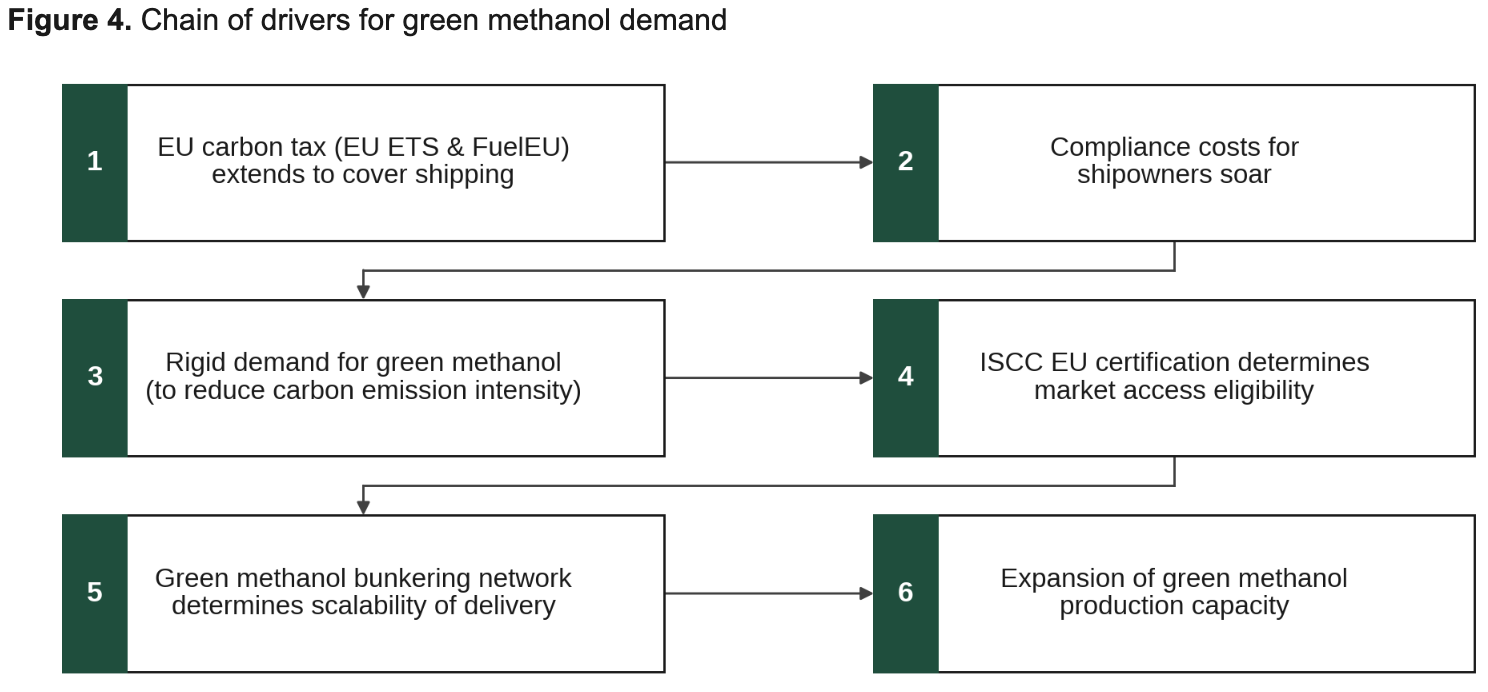
4. Core Driving Force of Green Methanol
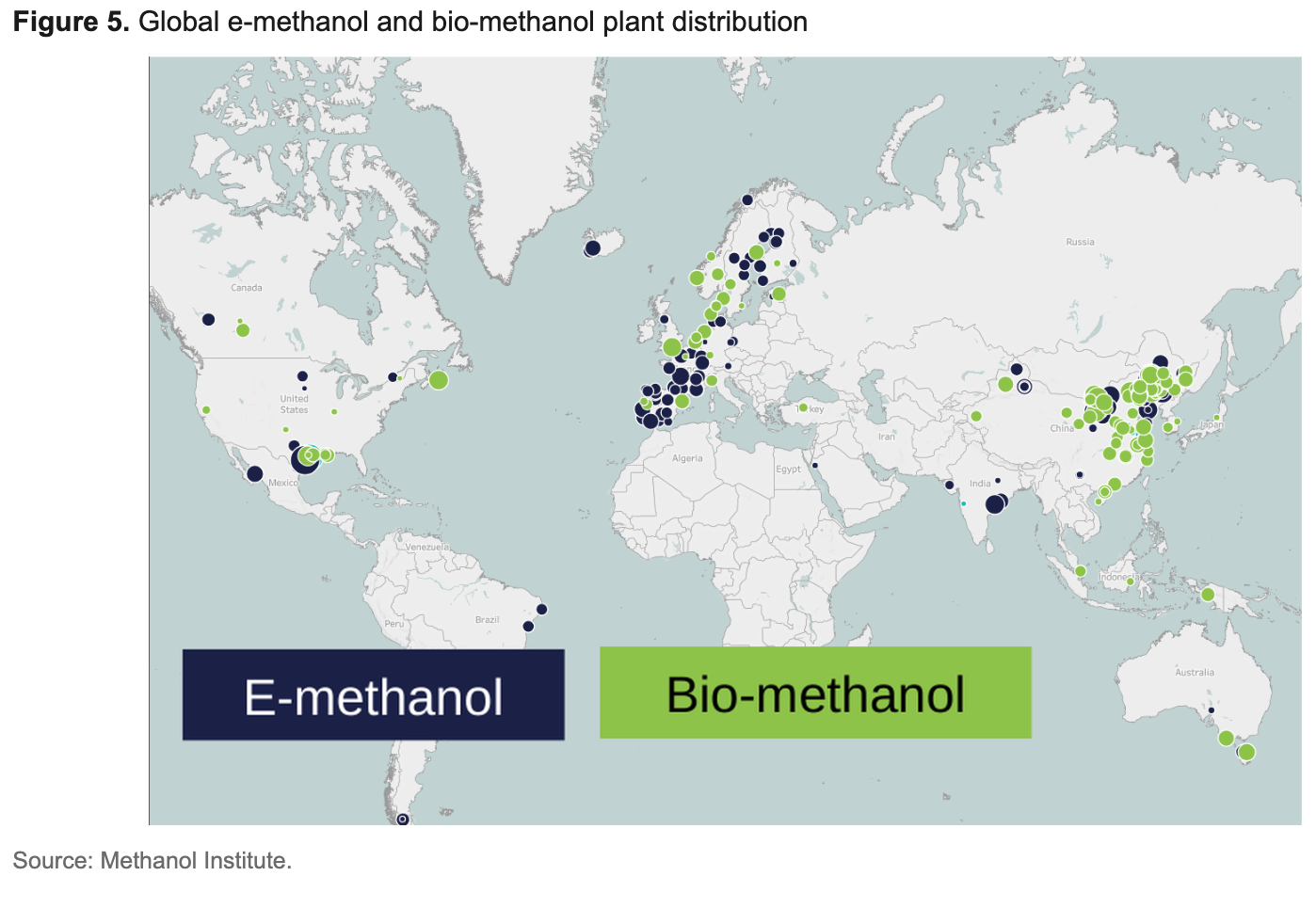
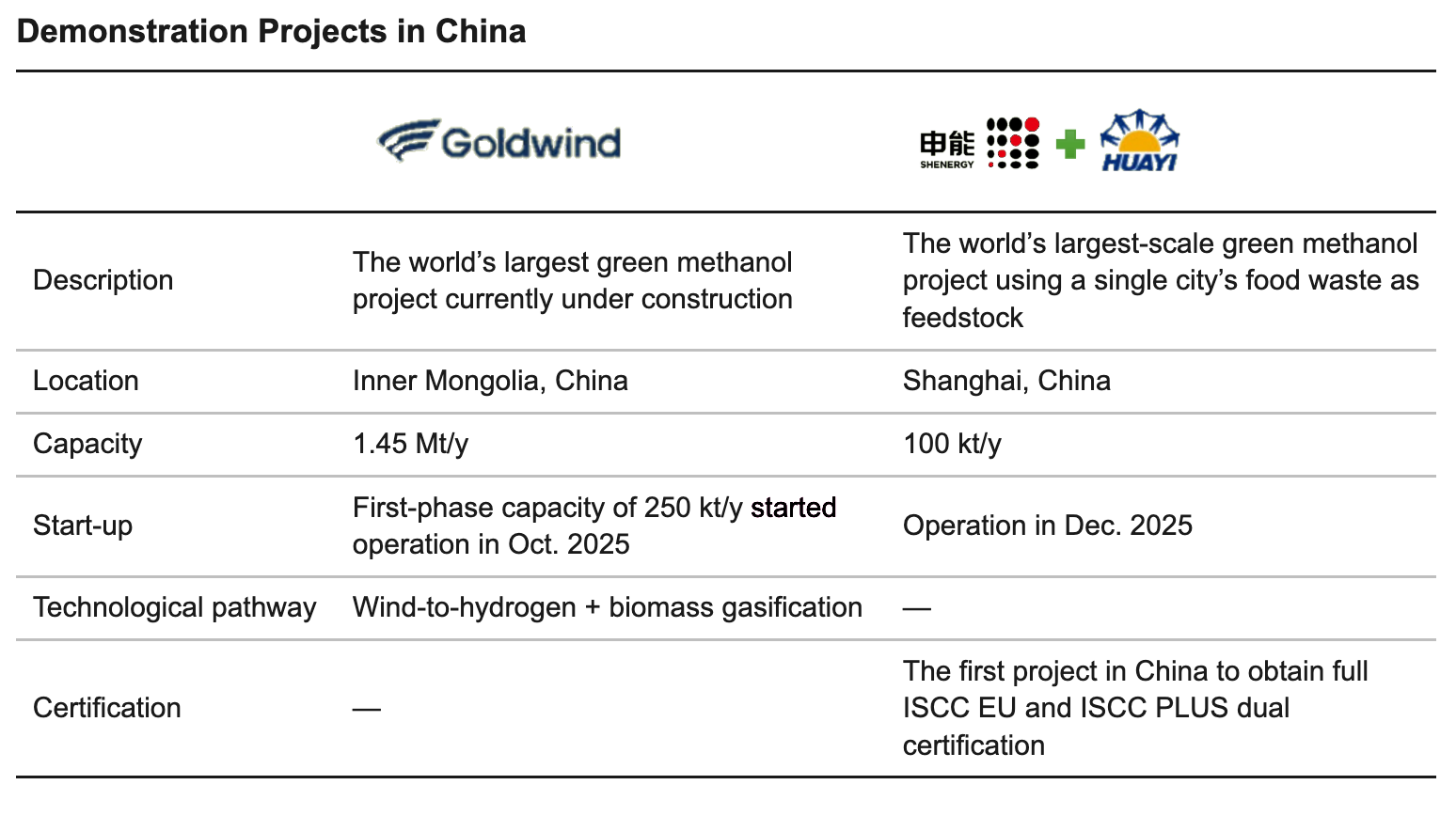
5. China’s Strategic Position in Green Methanol
6. Future Outlook: 2025–2030 Roadmap
7. Daydream: B2B Tailor-made Projects in Europe / Asia / North America
8. Sources
Introduction
This document presents factual information as well as estimates on the development of green methanol in 2025, 2026, which, for industrial and geopolitical reasons, is bound to grow in the coming years.
Drawing on our expertise in market analysis and industrial strategy, we can support you on green methanol topics across Asia, India, Europe, and North and South America.
1. What is Green Methanol?
- Green methanol = Green raw material + Green Process
- Two main types:
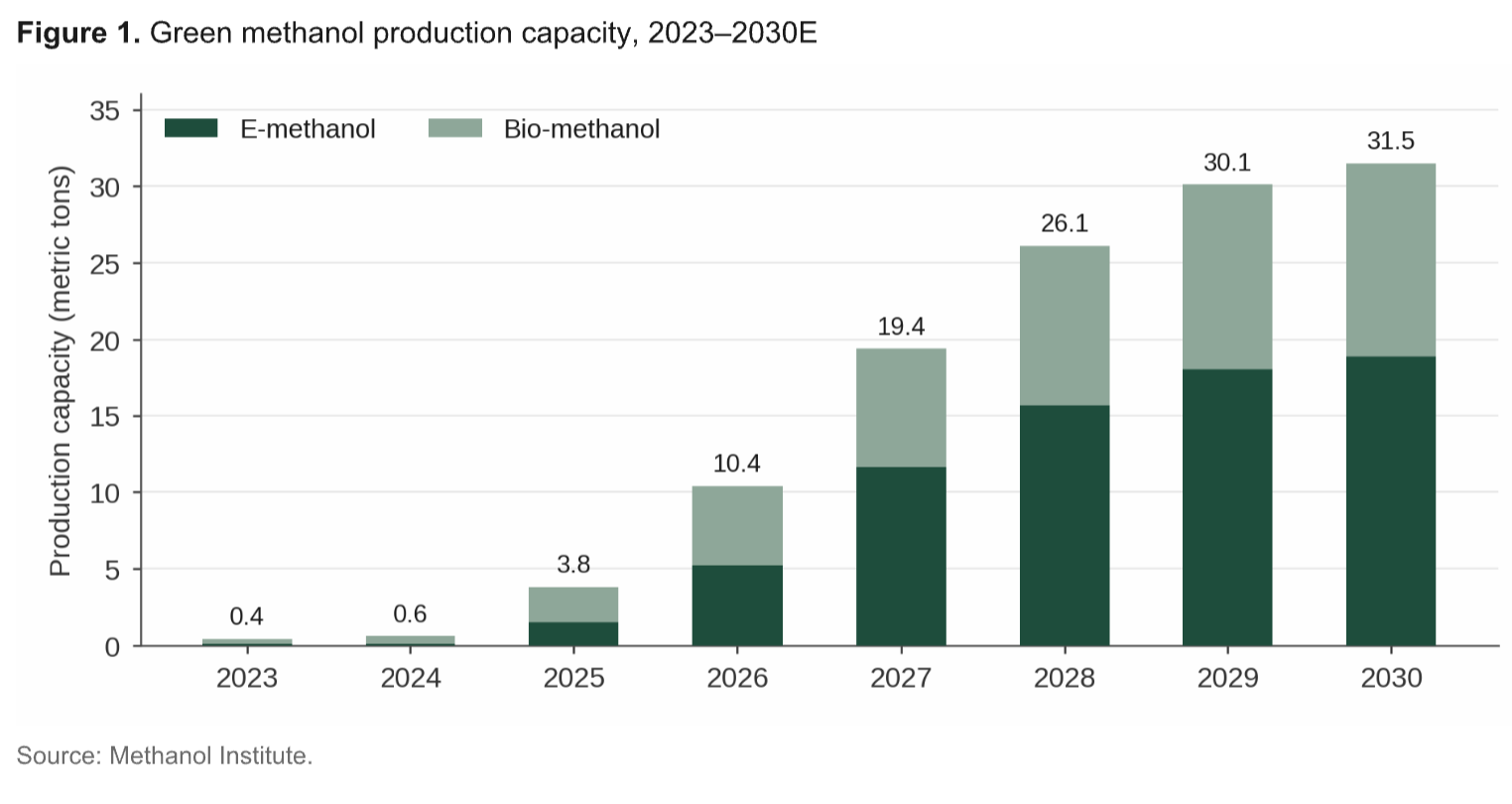
- Bio-methanol: produced from agricultural/forestry biomass waste via gasification and synthesis
- E-methanol: renewable electricity → green hydrogen (electrolysis) + captured CO₂ → methanol synthesis
2. How to Produce Green Methanol?
Figure 2. Production pathways: green (bio- and e-methanol), blue, grey and brown methanol
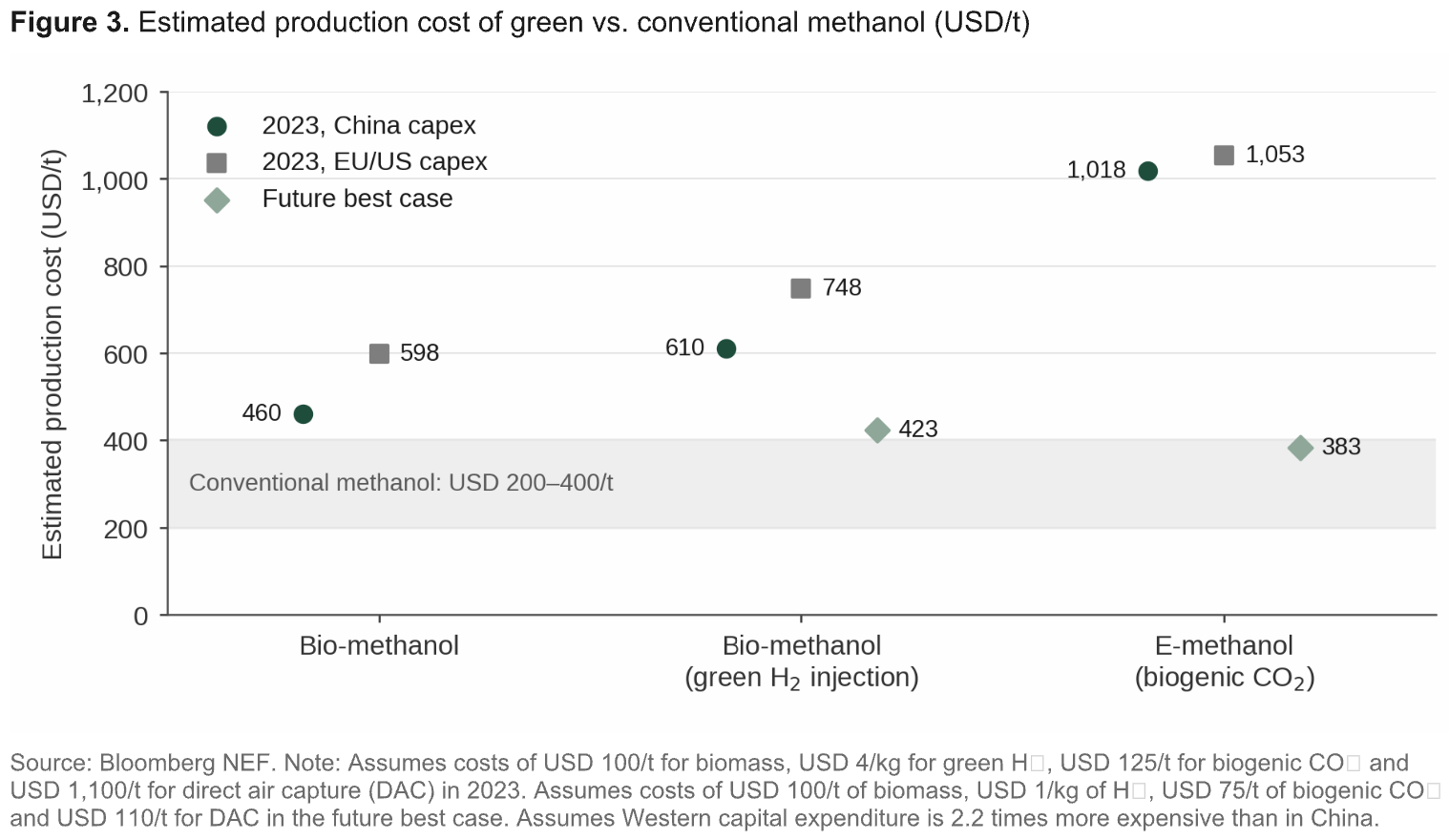
3. Cost Comparison: Green vs. Conventional Methanol
4. Core Driving Force of Green Methanol
5. China’s Strategic Position in Green Methanol
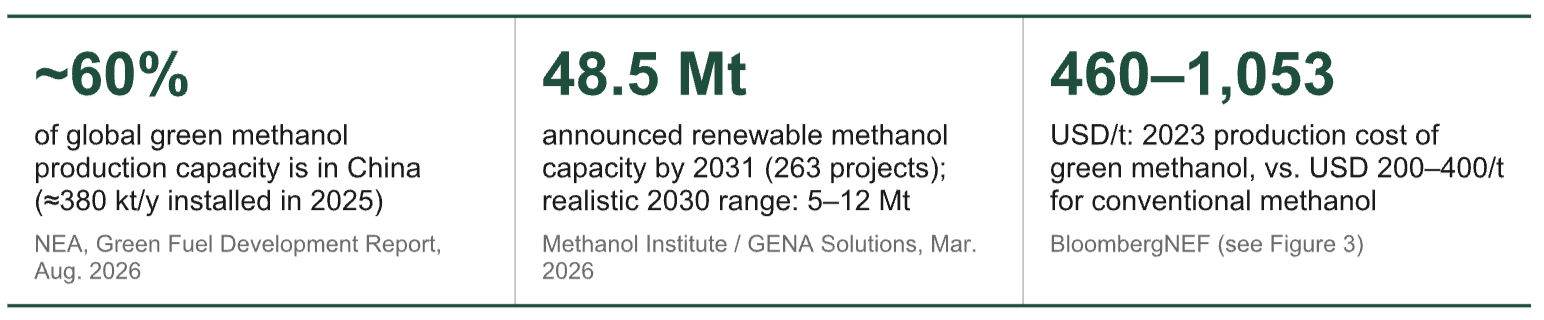
- 83% of global methanol-powered vessel orders are held by Chinese shipyards — covering design, propulsion systems, and full delivery
- 20+ Mt/year planned green methanol capacity in China -— the largest nationally planned capacity worldwide
- 75% of globally certified green methanol projects (meeting strict EU ISCC standards) are located in China
6. Future Outlook: 2025–2030 Roadmap
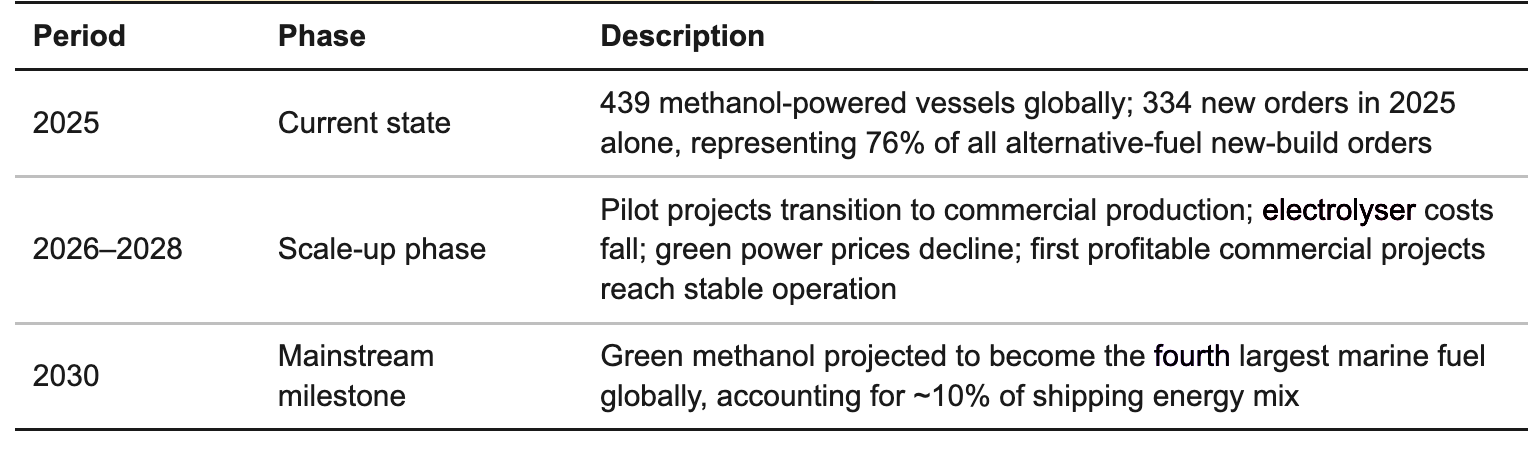
- China’s 2030 regional structure: “West produces → East consumes → Coastal ports bunker” — leveraging inland renewable resources and eastern demand centers
- Dominant technology path: integrated “Green Power + Green Hydrogen + CCUS + Green Methanol” projects become the mainstream model
- Key technology advances: off-grid electrolysis, high-efficiency biomass gasification, direct air CO₂ capture, and wind-solar-hydrogen-methanol co-integration
- Demand structure broadens: shipping remains the anchor market; heavy trucking, industrial chemicals, and SAF feedstock applications scale up progressively
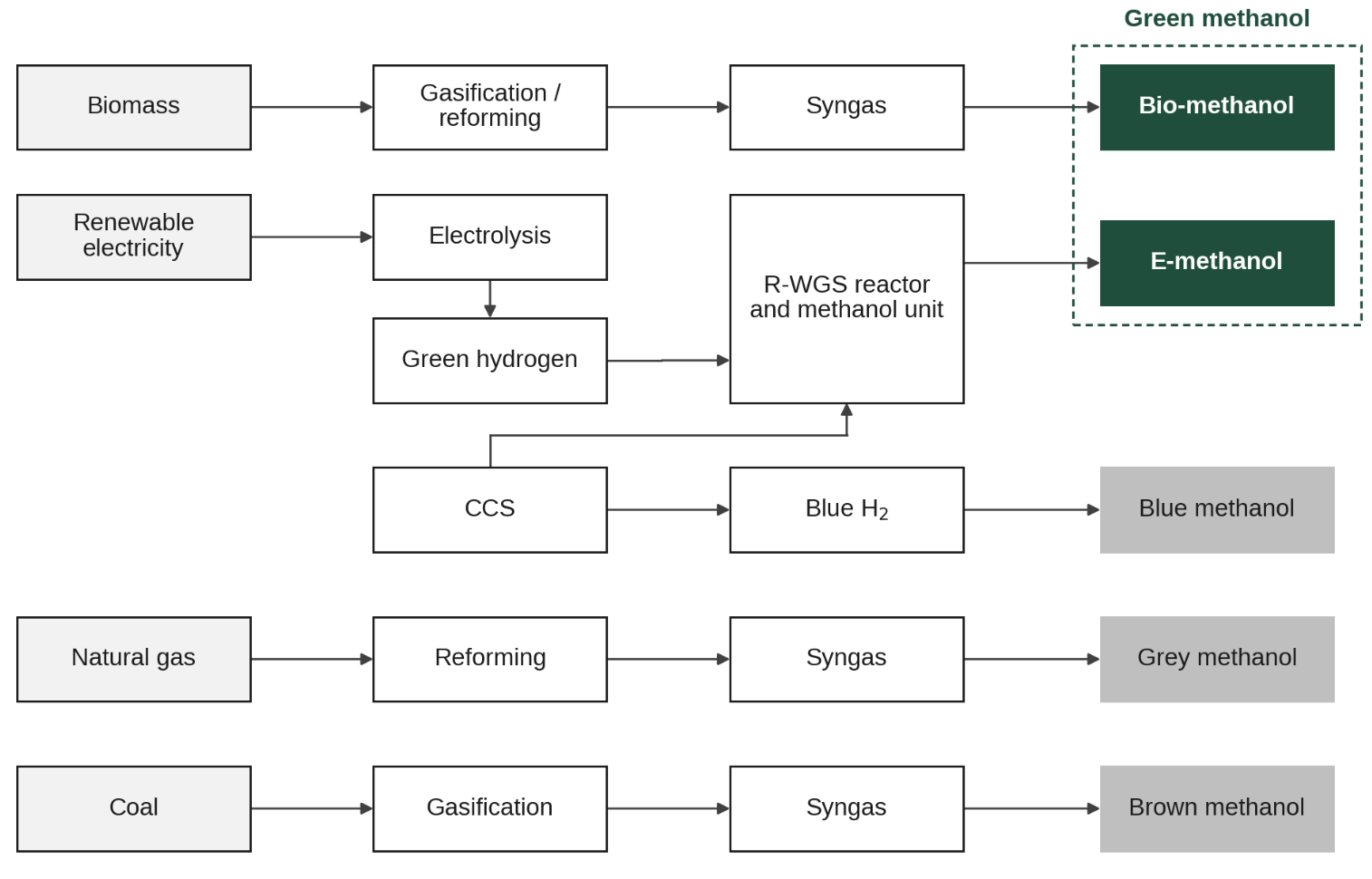
- Cost parity timeline: green electricity at 0.1 CNY/kWh triggers e-methanol parity; achievable in wind/solar-rich regions by late 2020s
7. Daydream: B2B Tailor-made Projects in Europe / Asia / North America
Daydream has performed multiple projects in the B2B material industry over the last decade, across the manufacturing value chain from raw materials to products.
We have successfully completed 70+ energy- related projects worldwide, across the manufacturing value chain from raw materials to end-user markets for B2B players, most of them being the largest in the field.
Since 2000, Daydream offerings:
- Market & Business Strategy
- New Business Development
- Sustainability & Digitalization
- Business Improvement (Market Segmentation, Client Segmentation, Sourcing strategy, Channel-to-market, Business & Go-to-market Plan, M&A…)
8. Sources
- Scaling Up Hydrogen: The Case for Low Carbon Methanol (Bloomberg NEF)
- Green Methanol 2023
- Innovation Outlook: Renewable Methanol (Methanol Institute & IRENA)
- Methanex Corporate Presentation (Methanex)
- Sustainable Report 2025 (Methanex)
- Pre-feasibility Summary of the Green Methanol Production from Biogas and Green Hydrogen in Paraná, Brazil (Deutsche Gesellschaft für Internationale Zusammenarbeit (GIZ) GmbH)
- Green Methanol from Biogas in Denmark (IEA Bioenergy)
- Green Methanol (Johnson Matthey)
- Green Methanol Production from Atmospheric CO₂ (Susteoninc)